Finding your perfect mattress doesn't need to be difficult. We know that making an informed purchasing decision starts with understanding your options. By learning about the various mattress materials and comfort ratings, you can easily compare your choices and find the best mattress for your needs and preferences.
In this EZ Living Furniture blog, we explain and compare the most common mattress types and features, including foams, springs, and fillings, to help you understand the differences and choose with confidence!
Understanding Mattress Types
It can feel a little overwhelming shopping for a new mattress, especially if you start to fixate on the small details and features listed. While every mattress might seem completely different, there are only three main types of mattresses.
- Foam Mattresses
- Spring Mattresses
- Hybrid Mattresses
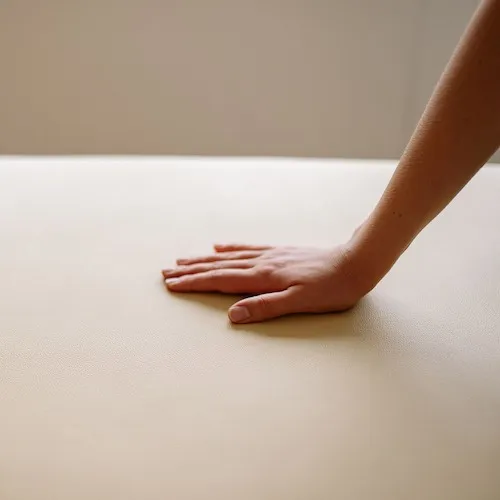
Foam Mattresses: Mattresses made entirely of foam – typically, polyurethane, closed-cell memory foam, or open-cell memory foam.
Spring Mattresses: Mattresses made entirely of springs with minimal comfort fillings - typically, coil springs (or Bonnell) or pocket springs.
Hybrid Mattresses: Mattresses that are built with multiple layers, typically a comfort filling layer on top with a spring support core underneath.
Foam Mattresses | Spring Mattresses | Hybrid Mattresses | |
Key Features | Soft cushioning | Body support | Both |
Typical Lifespan | 5-8 Years | 7-10 Years | 10-15 Years |
Maintenance | Regular rotation | Regular rotation | Regular rotation |
Best Use | Pressure relief & side sleepers | Firm support & cooler sleeping | Balance of comfort & support |
Price | ** | *** | ***** |
Understanding The Various Foam Types
Fully foam and hybrid mattresses with foam included are typically made using one of these three foams listed below:
- Polyurethane Foam
- Traditional Closed-Cell Memory Foam
- Open-Cell Memory Foam
Polyurethane Foam: A flexible foam that provides general soft support for the body. This is one of the least expensive foams on the market.
Traditional Closed-Cell Memory Foam: Is a type of polyurethane foam combined with certain chemicals to offer pinpointed support that contours to the body. This foam will feel tougher and denser than standard polyurethane foam.
Open-Cell Memory Foam: The same as traditional memory foam but with additional internal pockets that allow for ventilation and airflow.
Polyurethane Foam | Traditional Closed-Cell Memory Foam | Open-Cell Memory Foam | |
Key Features |
|
|
|
Typical Lifespan | 5-8 Years | 7-10 Years | 10-15 Years |
Best Use | Affordable support | Pressure relief | Cooling & pressure relief |
Price | ** | *** | ***** |
Heat Retention | High | High | Low |

Understanding The Various Spring Types
Springs are primarily used in mattresses to provide support, but different spring designs offer different levels of support, movement and stability. The four main types of springs are:
- Coil Springs (Bonnell)
- Pocket Springs
- T3 Pocket Springs
- Nested Pocket Springs
Coil Springs (or Bonnell Springs): Springs are linked together by a top and bottom wire frame, creating a supportive unit that moves as one piece. Coil springs are a simple and affordable option.
Pocket Springs: Individual springs are enclosed in fabric pockets, allowing each spring to respond separately to pressure and movement. These springs provide more personalised support, and they help to reduce movement across the mattress.
T3 Pocket Springs: Three strands of high-carbon steel wire are wound together to create a spring that is stronger and more responsive than a typical pocket spring.
Nested Pocket Springs: Like pocket springs, individual springs are enclosed in fabric pockets, but instead are arranged closely together, providing consistent support and improved stability across the mattress.
Coil Springs | Pocket Springs | T3 Pocket Springs | Nested Pocket Springs | |
Key Features | Linked support | Independent support | Stronger support | Enhanced stability |
Best Use | Back & Stomach sleepers | Side & back sleepers | Most sleeping positions | Most sleeping positions |
Price | *** | **** | ***** | ***** |
Outer Support Comparison
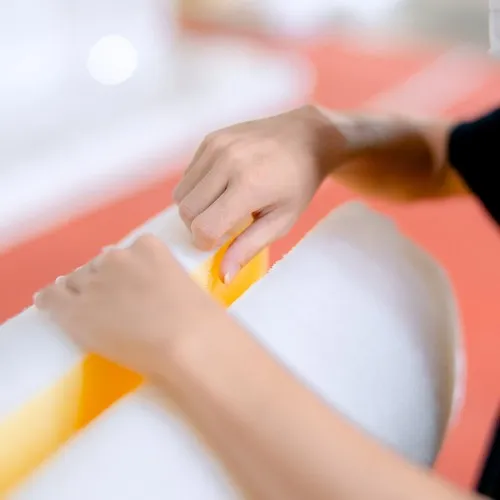
Outer support is an additional layer around the edges of a mattress. It reinforces the perimeter and can improve stability, comfort, and usable sleeping space. Two of the most common outer support types are explained below.
Wire Encasement: A steel wire frame that provides firm, rigid support around the mattress edge. It is particularly used for people who regularly sit on the side of the bed.
Foam Encasement: A foam border that provides softer edge support while increasing the usable sleep surface. It is recommended for people who frequently sleep near the edge of the mattress.
Wire Encasement | Foam Encasement | |
Key Features | Strong & firm perimeter support | Comfort, softer edge support |
Best Use | Sitting on the edge | Increased sleep surface |
Price | *** | **** |
Comfort Filling Comparison
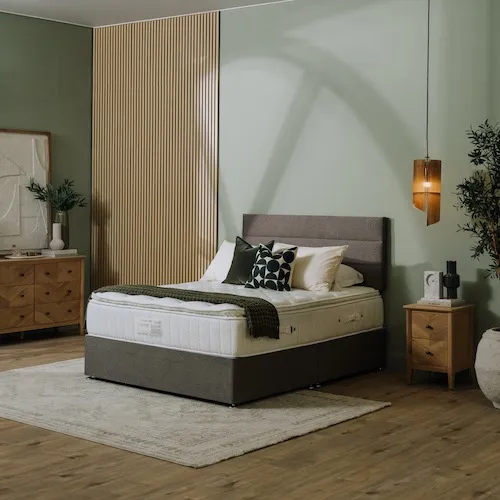
Comfort fillings are materials added to a mattress to enhance its overall feel and comfort. They can provide benefits such as pressure relief, temperature regulation, breathability and durability. The three main types of comfort fillings are:
Gel Filling: Gel-based materials are incorporated into the foam to help absorb and distribute body heat. They can provide a comfortable balance of cushioning and support.
Natural Latex: Natural latex is a responsive and breathable material originating from rubber tree sap. It provides consistent support while also allowing airflow through the mattress and can offer good pressure relief (like memory foam) but without excessive sinking.
Graphene: Graphene can be incorporated into foam to help improve heat distribution, breathability and durability. It can provide a plush, comfortable feel while adding strength and helping to manage temperature.
Gel Filling | Natural Latex | Graphene | |
Key features | Temperature regulation & cushioning | Breathable & responsive support | Breathability & durable support |
Best Use | Cooling & comfort | Natural, responsive support | Plush comfort, temperature management |
Price | *** | **** | ***** |

Comfort Rating Comparisons
Comfort ratings refer to how soft or firm a mattress feels when you lie on it. They range from soft (H1), soft-to-medium (H2), medium-to-firm (H3), firm (H4), and extra firm (H5). Soft provides a more cushioned, responsive feel while extra firm offers a flatter, more supportive surface.
The firmness rating (H1, etc.) attached to each name is designed to offer more clarity to buyers by associating a body weight recommendation for each comfort rating. Please note, this is a recommendation per person only and should be used as a starting point.
H1: Up to 60kg body weight
H2: 60 to 80kg body weight
H3: 80 to 100kg body weight
H4: 100 to 120kg body weight
H5: Over 120kg body weight
(H1) Soft | (H2) Soft-to-Medium | (H3) Medium-to-Firm | (H4) Firm | (H5) Extra Firm | |
What does it feel like? | Soft, cushioned feel with minimal firmness | A soft feel with some additional support | A balance of comfort & support | A solid, supportive feel with less sink | A very firm, flatter surface with minimal sink |
Best for... | Side sleepers | Side & back sleepers | Front, back, & side sleepers | Front & back sleepers | Front & back sleepers |
Please note: Comfort ratings are a general guide, as mattress firmness is subjective and can vary depending on body weight, sleeping position, and personal preference. The same mattress can feel different to different people, so we recommend trying your preferred mattress in store before purchasing.

FAQs
What is the difference between a Pillow Top and Standard Mattress?
Pillow Top mattresses have an additional layer of padding sewn to the top, providing a softer, more cushioned feel. A standard mattress doesn't have this additional pillow top layer and generally has a firmer, flatter surface/feel.
What is the difference between an Orthopaedic and Standard Mattress?
An Orthopaedic mattress is designed to provide enhanced support for the spine and joints, while a standard mattress only provides general comfort and support.
What mattress comfort rating is best for side sleepers?
Side sleepers often prefer a soft-to-medium or medium-to-firm mattress that provides cushioning and adequate support around the shoulders and hips.
What mattress comfort rating is best for back sleepers?
Back sleepers tend to benefit from a medium-to-firm or firm mattress because it provides a balance of comfort and support.
What mattress comfort rating is best for front sleepers?
Front sleepers tend to prefer a firmer mattress because it helps to prevent the body from sinking too deeply into the mattress.
We hope you enjoyed this content and found it useful and informative. We aim to share our expertise and knowledge with our customers, and to do this, we have a team of content creators working tirelessly behind the scenes. We do not use AI to create our content. Click this link to find out more about our team and content guidelines.
Share this post